


Was Jesus Borrowed from Pagan Religions?

Updated: Mar 14

Why the “Patchwork Messiah” Theory Is Historically Obsolete
Few claims circulate more confidently online than this one: Christianity didn’t invent anything new. Jesus was stitched together from earlier pagan gods — a patchwork messiah copied from Egyptian, Greek, Roman, and Near Eastern religions.
It sounds bold. It sounds informed. And it is almost entirely wrong.
What many do not realise is that this claim is not cutting-edge scholarship bravely challenging orthodoxy. It is, in fact, a recycled nineteenth-century theory, widely discussed, tested, and largely abandoned by historians more than a hundred years ago. The scholarship people rely on today is not radical or suppressed — it is simply out of date.¹
Origins of the Pagan-Borrowing Theory
The idea that Christianity copied pagan myths emerged in the late nineteenth century, during the rise of comparative religion. Scholars were beginning to study religions side by side, and some drew sweeping conclusions based on surface similarities rather than historical context.
Figures such as Kersey Graves (The World’s Sixteen Crucified Saviors, 1875) claimed that numerous ancient gods were born of virgins, crucified, and resurrected. These lists still circulate online today, often copied uncritically, despite having been dismantled repeatedly by historians.²
Later writers such as James G. Frazer (The Golden Bough) speculated that Christianity was simply another example of a universal pattern of “dying and rising gods.”³ These ideas shaped popular thought well into the early twentieth century and were revived for modern audiences by works such as The Jesus Mysteries (Freke & Gandy, 1999).
What is often missed is that specialists did not stand still. These theories were carefully examined, criticised, and increasingly abandoned as historical methods improved.⁴
Superficial Similarities ≠ Historical Evidence
The pagan-parallels argument typically relies on stacking vague resemblances:
Horus was born of a virgin
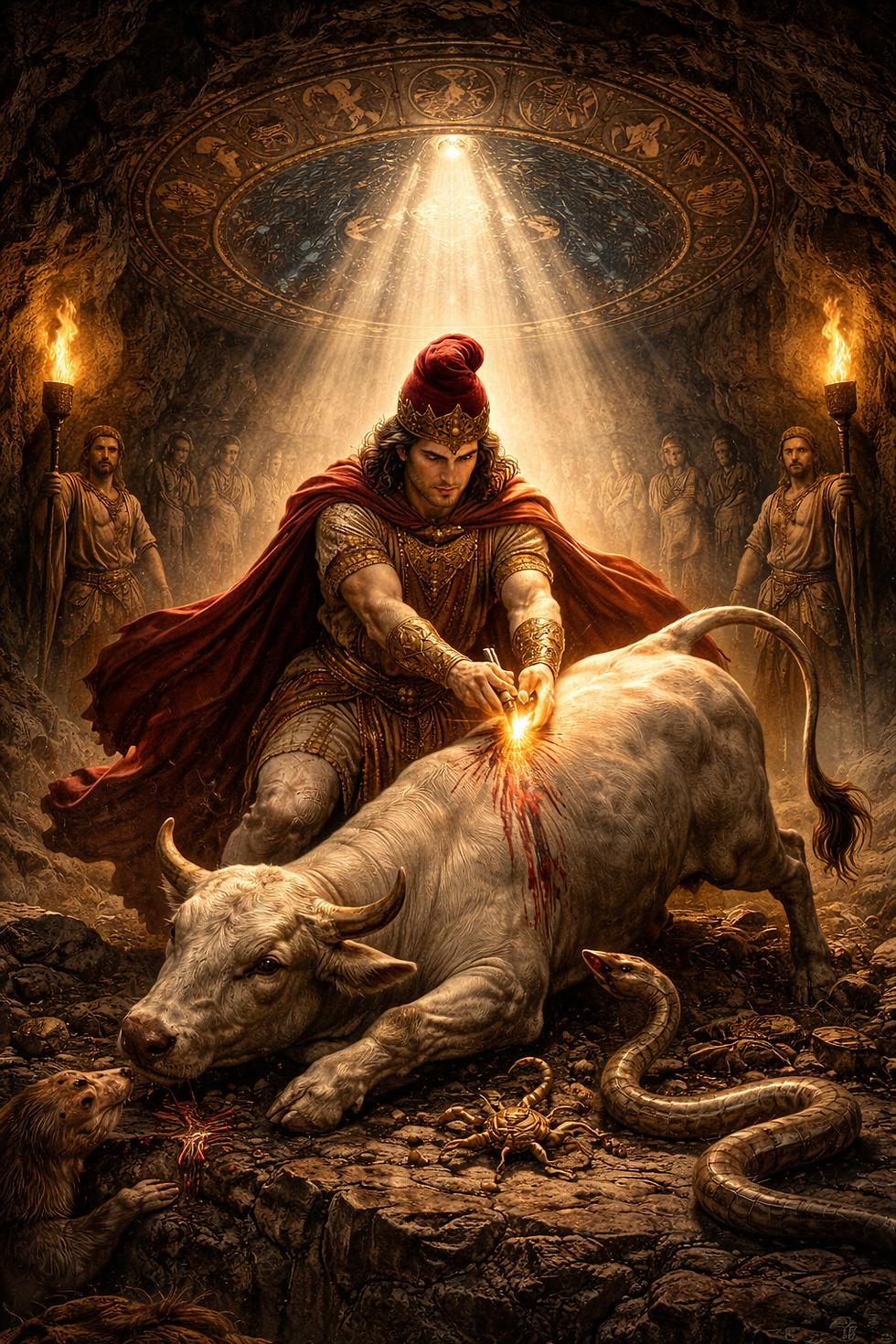
Mithras had twelve disciples
Osiris rose from the dead
Dionysus turned water into wine
The problem is that none of these claims withstands close historical scrutiny.
Egyptian sources describing Horus, for example, contain multiple, inconsistent birth narratives, none of which resemble a Jewish virgin conception.⁵ The stories involve divine sexuality and mythic symbolism, not historical incarnation.
There is no ancient evidence that Mithras had disciples — let alone twelve. This claim rests on misread iconography and late Roman material that does not describe Mithras’ life at all.⁶
Osiris does not rise bodily into history; he becomes ruler of the underworld. His story concerns fertility cycles, not resurrection in the Jewish sense.⁷
As Bart D. Ehrman (an agnostic New Testament scholar) observes, the alleged parallels are typically late, exaggerated, or fundamentally different in meaning:
“The resurrection of Jesus is unlike the supposed ‘dying-and-rising gods’ of the pagan religions.”⁸
Chronology Undermines the Borrowing Hypothesis
For borrowing to occur, the supposed source material must precede the borrowing.
This is a fatal problem for the pagan-parallels theory.
Much of the detailed evidence for Mithraism, for example, post-dates the earliest Christian texts.⁹ The same is true for several Greco-Roman mystery cult practices often invoked as precedents. In some cases, the influence may even run in the opposite direction.
Historians require dates, transmission paths, and mechanisms of influence. The pagan-borrowing thesis provides none of these in a credible form.¹⁰

Jesus Fits Judaism — Not Paganism
This is the decisive point.
Jesus emerges from Second Temple Judaism, one of the most monotheistic and anti-pagan cultures of the ancient world. Jewish identity in this period was defined precisely by resistance to pagan religion.¹¹
The categories used to describe Jesus — Messiah, Son of Man, Lord, resurrection of the dead — are Jewish categories, drawn from Israel’s scriptures and internal debates, not from pagan mythology.¹²
After extensive study of ancient Near Eastern and Mediterranean myths, scholar Tryggve Mettinger concluded:
“There is, as far as I am aware, no prima facie evidence that the death and resurrection of Jesus is a mythological construct drawing on pagan myths.”¹³
Christianity did not need pagan gods to explain Jesus. Judaism already provided the conceptual framework — even if the conclusions were controversial.
Why the Patchwork Theory Persists
The pagan-borrowing theory persists largely because popular culture lags behind scholarship.
Ronald H. Nash documented decades ago that the theory peaked between 1890 and 1940 and steadily declined as historical methods improved.¹⁵ Today, it survives mainly in popular media and internet discourse, not in specialist research.
Ironically, many modern critics of Christianity rely on Victorian-era speculation while accusing religious believers of being intellectually outdated.
Conclusion
Christianity did not invent Jesus by stitching together pagan myths.
The evidence points elsewhere:
Jesus belongs firmly within Second Temple Judaism
Alleged pagan parallels are superficial or false
Chronology does not support borrowing
Modern scholarship has largely abandoned the theory
You may reject Christian theology. That is a philosophical decision.But the claim that Jesus was a pagan patchwork is not a modern insight — it is a historical relic.
Footnotes
Ronald H. Nash, The Gospel and the Greeks (Phillipsburg, NJ: P&R Publishing, 1992), 13–24.
Kersey Graves, The World’s Sixteen Crucified Saviors (Boston: Colby & Rich, 1875).
James G. Frazer, The Golden Bough, abridged ed. (New York: Macmillan, 1922).
Edwin M. Yamauchi, “Easter: Myth, Hallucination, or History?” Christian Scholar’s Review 6 (1977): 95–113.
R. T. Rundle Clark, Myth and Symbol in Ancient Egypt (London: Thames & Hudson, 1959), 71–89.
Manfred Clauss, The Roman Cult of Mithras (Edinburgh: Edinburgh University Press, 2000), 21–33.
Jan Assmann, Death and Salvation in Ancient Egypt (Ithaca, NY: Cornell University Press, 2005), 92–117.
Bart D. Ehrman, Did Jesus Exist? (New York: HarperOne, 2012), 229–232.
Clauss, Roman Cult of Mithras, 3–10.
Larry Hurtado, Lord Jesus Christ (Grand Rapids: Eerdmans, 2003), 28–34.
E. P. Sanders, Judaism: Practice and Belief, 63 BCE–66 CE (London: SCM Press, 1992), 47–75.
N. T. Wright, The Resurrection of the Son of God (Minneapolis: Fortress Press, 2003), 85–128.
Tryggve Mettinger, The Riddle of Resurrection (Stockholm: Almqvist & Wiksell, 2001), 221.
Richard Burridge, What Are the Gospels? (Cambridge: Cambridge University Press, 2004), 105–137.
Nash, The Gospel and the Greeks, 161–178.


Comments